The uncomfortable truth is that America’s “safest” places are defined not by beauty or comfort, but by whether they matter to a missile planner studying a map in the dark. Analysts point to vast stretches of the East Coast and parts of the Midwest that, while densely populated, lack nearby nuclear silos or critical launch facilities. Maine’s forests, Vermont’s hills, and even crowded coastal states like New Jersey or Florida may face fewer immediate strikes than the lonely plains of the Upper Midwest.
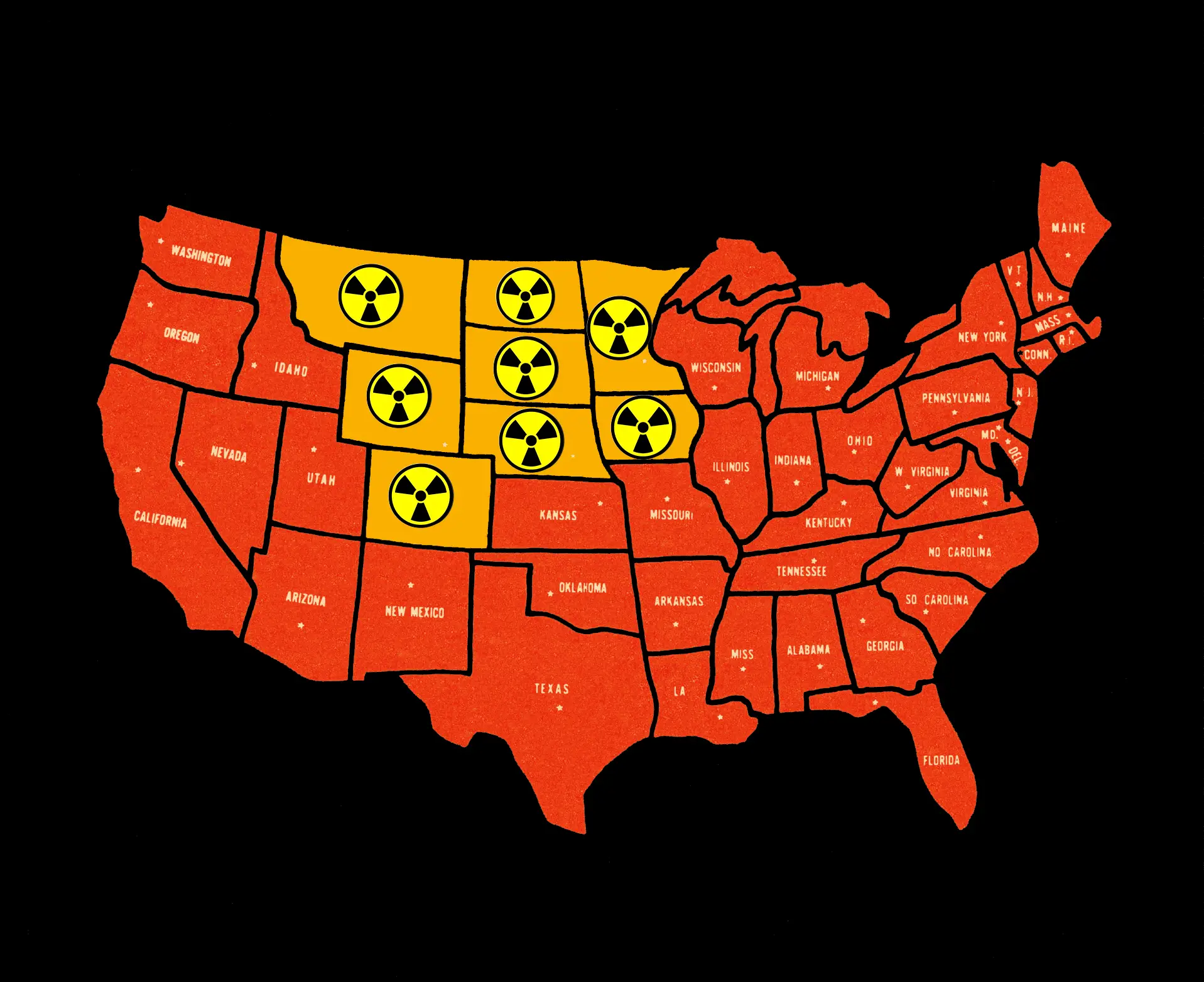
By contrast, the quiet fields of Montana, Wyoming, the Dakotas, Nebraska, Colorado, Iowa and Minnesota sit near the hardened silos designed to unleash retaliation. In a true nuclear exchange, those silos become bullseyes. Yet experts warn that any sense of safety is fragile, even illusory. With thousands of warheads in existence and cities, ports and bases on every coast, the harsh conclusion remains: some places may be hit later, but nowhere is truly beyond the reach of war.
World War 3 fears remain at an all-time high, and we have enough data to know which states would be the least safe in the event of a nuclear attack.
On Saturday (February 28), the US and Israel issued a joint strike on Iran, ‘Operation Epic Fury’, with the first strikes killing Supreme Leader Ayatollah Ali Khamenei, who’d been Iran’s leader for over three decades.
Strikes have hit Tehran, Tabriz, and Kermanshah, among four other cities. Iran has since retaliated with their own strikes on Israeli and US military bases across the Gulf countries, including the United Arab Emirates (UAE), Kuwait, Saudi Arabia, and Qatar.
On Monday (March 2), the US embassy in Riyadh, Saudi Arabia, was struck down by drones, leading the US government to warn that ‘the hardest hits are yet to come’.
Although some people may be certain that a nuclear strike on the US would focus solely on causing the most death and destruction, that isn’t always the case.
It can often be more strategic to attack a nation’s ability to defend itself or to counterattack; in this case, it would be targeting the many missile silos the US has on land.
With this in mind, some states would be much safer than others.
A 2024 Newsweek report analyzing this map found that these 8 places would be the most affected by radiation exposure risk, and are therefore the most dangerous states to live in, which were:
Montana
Wyoming
Colorado
Nebraska
South Dakota
North Dakota
Iowa
Minnesota
On the flip side, 15 states were considered the ‘safest’ to live in, all things considered, which were:
Maine
New Hampshire
Vermont
Massachusetts
Rhode Island
Connecticut
New York
New Jersey
Pennsylvania
Delaware
Maryland
District of Columbia
Virginia
West Virginia
North Carolina
South Carolina
Georgia
Florida
Alabama
Mississippi
Tennessee
Kentucky
Ohio
Indiana
Michigan
However, the ‘safety’ of these states would all be dependent on how much radiation residents might be exposed to if their main nuclear sites were hit.
A fallout map by the Scientific American Magazine has previously shown just where the most impact would be should there be a nuclear attack on missile silos in the US heartland, namely Colorado, Wyoming, Nebraska, Montana, and North Dakota.
It is important to note that this is a simulation and was created before the attack on Iran.
The colors represent the ‘average exposure risk calculated for each latitude and longitude point based on a year’s worth of data’.
Outside of the US, a few other countries have also been touted as being the ‘safest’ in the wake of a possible nuclear war.
But with all of that being said, nowhere is particularly ‘safe’ if modern nuclear weapons are used in a global conflict, according to experts who spoke to Newsweek.
John Erath, the Senior Policy Director for the Center for Arms Control and Non-Proliferation, said: “While those who live near military facilities, ICBM silos in the Midwest or submarine bases along the coasts might bear the most immediate and severe consequences of a nuclear attack, there’s no question: ANY nuclear war or weapons detonation would be bad for everyone.
“Nowhere is truly ‘safe’ from fallout and other consequences like contamination of food and water supplies and prolonged radiation exposure.”