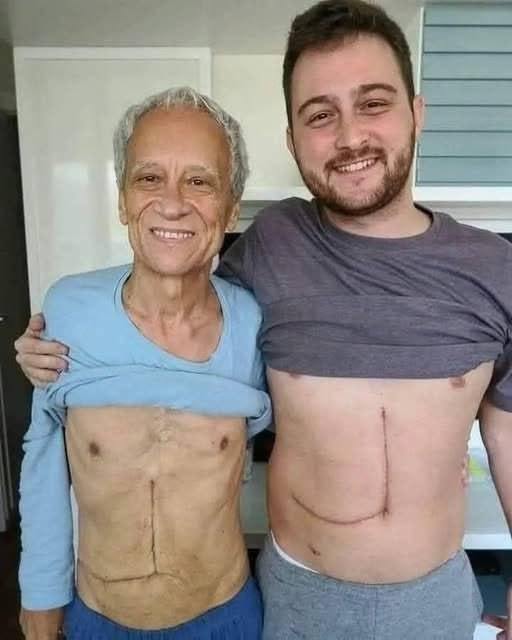
They stood side by side for the photo, lifting their shirts to reveal matching scars, smiling with the kind of pride that only comes from sacrifice. A father saved. A son who gave without hesitation. When doctors said a liver transplant was the only chance, the son didn’t pause. He volunteered immediately, insisting it was simple: his father had given him life, and now he was giving something back. The surgery was long, tense, but successful. The father recovered. The son was called a hero. For a moment, the world felt right.
In the weeks after the operation, the father regained strength. His color returned. His appetite came back. Friends and relatives celebrated what looked like a miracle made possible by love. The son, meanwhile, downplayed his own pain. He joked about the scar, said recovery was harder than expected but manageable. He wanted everyone focused on his dad’s second chance. Quietly, though, complications began to creep in — fatigue that didn’t lift, pain that worsened instead of fading, lab results that raised concern.
Doctors monitored him closely, adjusting medications, ordering tests, trying to understand why his body wasn’t responding as expected. Liver donation is considered safe, but it is never without risk. The son remained optimistic, telling his father not to worry. He didn’t want guilt to replace gratitude. He kept smiling, kept reassuring, even as hospital visits became more frequent and nights more restless.
Then came the turn no one was prepared for. An infection, aggressive and sudden, overwhelmed his weakened system. Treatments were started immediately, but his condition declined rapidly. The same hospital halls that once echoed with relief now carried a different kind of silence. His father sat at his bedside, holding the hand that had saved him, whispering apologies that no one should ever have to say.
The son passed away, leaving behind a grief that words cannot contain. A life lost while saving another. A family shattered by a sacrifice that went too far. His father survived — but survival came with a weight he will carry forever. He has since spoken about the unbearable pain of outliving the child who saved him, and the complicated mix of gratitude, guilt, and sorrow that never truly leaves.
This story is not a warning against donation, nor a rejection of medical miracles. It is a reminder of the real human cost behind acts we call heroic. Love can be brave and devastating at the same time. One scar healed. One scar became permanent. And in between them stands a truth that will never fade: sometimes the purest love asks everything — and then takes even more.


