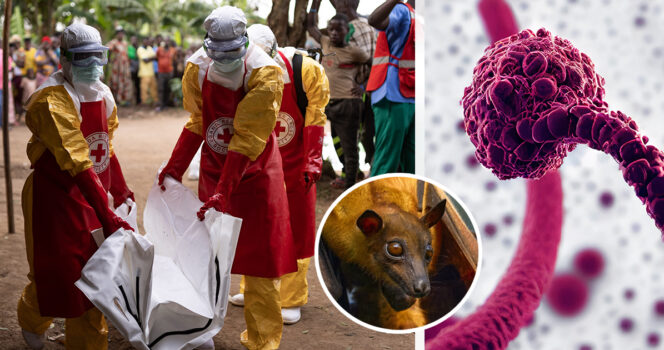
The Ebola outbreak in the Democratic Republic of Congo has killed more than 130 people, with more than 500 cases suspected. Fears of the virus spreading worldwide are surging. Here are the symptoms to be aware of.
Per the BBC, officials said that by Tuesday, more than 513 Ebola cases were suspected in DR Congo. Moreover, one person has also died from Ebola in the neighboring country of Uganda.
One American tested positive for Ebola after being exposed while working with a medical missionary group in the Democratic Republic of Congo. However, no Americans on home soil have so far been confirmed to have the virus.
People living near the center of an Ebola outbreak that has killed 131 people say they are very afraid. One man in the Itur province, where the outbreak started, people said they are very afraid, adding that “Ebola has caused us great suffering.”
Moreover, according to the BBC, a representative from the World Health Organization (WHO) warned that the disease may be spreading faster than previously believed.
Dr. Anne Ancia from the WHO told the British news outlet that as health workers investigate more, they are finding cases in new areas.
Ebola symptoms and how it spreads
A study by the MRC Center for Global Infectious Disease Analysis in London said there may be many more cases yet to be found. Researchers said the total number of cases could already exceed 1,000.
A statement from the WHO states that the epidemic of Ebola disease is caused by the Bundibugyo virus. Scentists believe African fruit bats are involved in the spread
So, what are some symptoms to be aware of? According to the CDC’s Ebola symptoms guide, symptoms usually appear between 2 and 21 days after exposure, with most people becoming sick about 8 to 10 days later.
Early symptoms, often called “dry symptoms,” include fever, severe headache, muscle and joint pain, weakness, fatigue, and a sore throat. Because these symptoms are similar to illnesses like malaria or the flu, Ebola can initially be difficult to identify.
As the disease progresses, patients may develop more severe “wet symptoms,” including nausea, vomiting, diarrhea, abdominal pain, loss of appetite, and unexplained bleeding. Other possible symptoms include chest pain, shortness of breath, confusion, red eyes, skin rash, hiccups, and seizures.
The CDC also notes that survivors can experience long-term health effects such as fatigue, headaches, muscle pain, vision problems, depression, anxiety, and memory issues.
Please share this article to spread awareness about Ebola.


